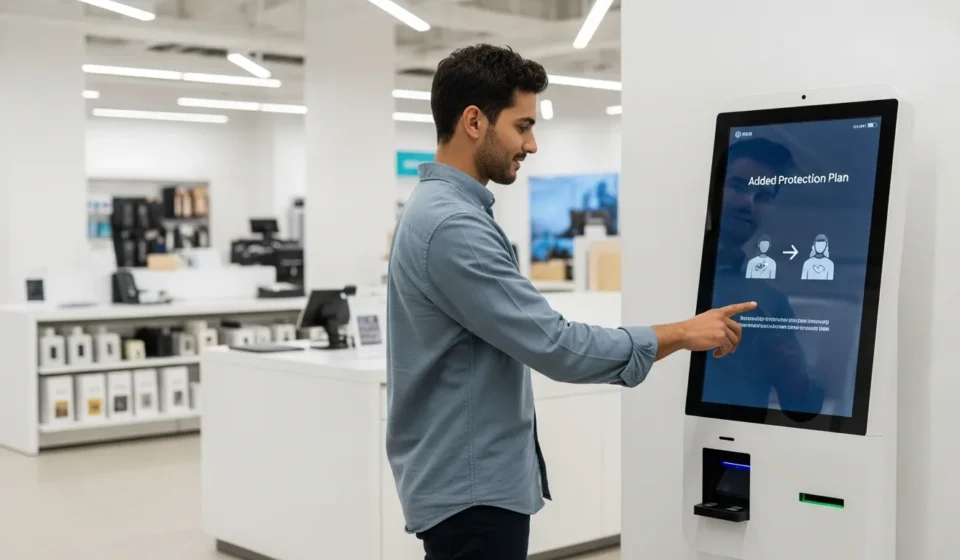
📸 Image generated using AI

The Death of the Paper Warranty
The days of a customer digging through a kitchen drawer to find a faded paper receipt for a broken refrigerator are over. In 2026, protection is no longer an afterthought or a separate transaction. It is woven into the very fabric of the purchase. Insurtech embedded warranty and protection products have transformed from a clunky upsell into a seamless digital experience that benefits the consumer, the merchant, and the insurer simultaneously.
When a shopper buys a high-end laptop today, he doesn’t want to navigate a third-party website to register a serial number. He expects the protection plan to be active the moment his payment is confirmed. This shift is driven by the realization that insurance is most valuable when it is invisible yet omnipresent. By integrating coverage directly into the checkout flow, companies are seeing attachment rates that traditional insurers could only dream of a decade ago.
The Mechanics of Embedded Protection
The technical backbone of this revolution lies in the way modern financial APIs facilitate seamless data exchange between the merchant’s POS system and the insurtech provider. This real-time connectivity allows for “just-in-time” underwriting. Instead of static pricing, the cost of a warranty can now be calculated dynamically based on the customer’s profile, the specific product SKU, and even the current geographical risk factors.
For the developer building these systems, the focus has shifted toward low-latency integration. He ensures that the insurance offer doesn’t slow down the checkout process, as even a one-second delay can lead to cart abandonment. The result is a frictionless experience where the protection product feels like a natural extension of the physical item being purchased.
Why Merchants are Racing to Integrate
Retailers are no longer just selling goods; they are becoming distribution hubs for financial services. The primary motivator is margin expansion. In an era of razor-thin retail margins, the commission earned from an embedded warranty product can represent a significant portion of the total profit on a sale.
- Increased Customer Lifetime Value: A customer who has a positive claims experience is far more likely to return to the same merchant for his next purchase.
- Reduced Returns: When a product malfunctions, a robust protection plan often leads to a repair or replacement rather than a flat return, preserving the original sale.
- Data Insights: Merchants gain deeper insights into product durability and customer behavior, allowing them to refine their inventory based on real-world performance data.
AI-Driven Underwriting and Claims
The real magic happens when things go wrong. Traditional claims processes were designed to be difficult, acting as a deterrent to prevent payouts. Modern insurtech firms have flipped this model. By integrating automated parametric triggers and smart contracts, many claims are now settled instantly without a single human phone call.
If a customer drops his smartphone, he can simply upload a photo of the cracked screen through the merchant’s app. AI computer vision models analyze the damage in seconds, verify the policy, and issue a repair voucher or a digital cash payout immediately. This level of efficiency removes the friction that once defined the insurance industry, turning a potential negative experience into a moment of brand loyalty.
Future Outlook: Beyond Electronics
While electronics and appliances were the early adopters, embedded protection is expanding into every corner of the economy. We are seeing the rise of “protection-as-a-service” for digital assets, travel bookings, and even high-fashion rentals. The logic remains the same: identify the moment of maximum risk for the consumer and offer him a solution exactly when he is most aware of it.
As we move further into 2026, the distinction between a product and its protection will continue to blur. The most successful brands will be those that treat insurance not as a secondary revenue stream, but as a core component of the product’s value proposition. For the modern man, the peace of mind that his purchase is protected is just as important as the purchase itself.
Frequently Asked Questions
What exactly are embedded warranty products?
Embedded warranty products are insurance or protection plans offered directly within the purchase journey of a product, typically at the point of sale, rather than being sold as a separate, standalone policy later.
How do these products benefit the consumer?
The consumer benefits from a simplified purchase process, instant coverage activation, and often a much faster, AI-driven claims process that eliminates the need for manual paperwork or long phone calls.
Are embedded warranties more expensive than traditional ones?
Not necessarily. Because they are integrated directly into the sale, the distribution costs are lower, which often allows insurtech companies to offer more competitive pricing or better coverage terms than traditional third-party providers.
Can embedded protection be applied to services?
Yes, embedded protection is increasingly common in service-based industries, such as travel (trip cancellation), logistics (shipping protection), and even professional services where performance guarantees are required.