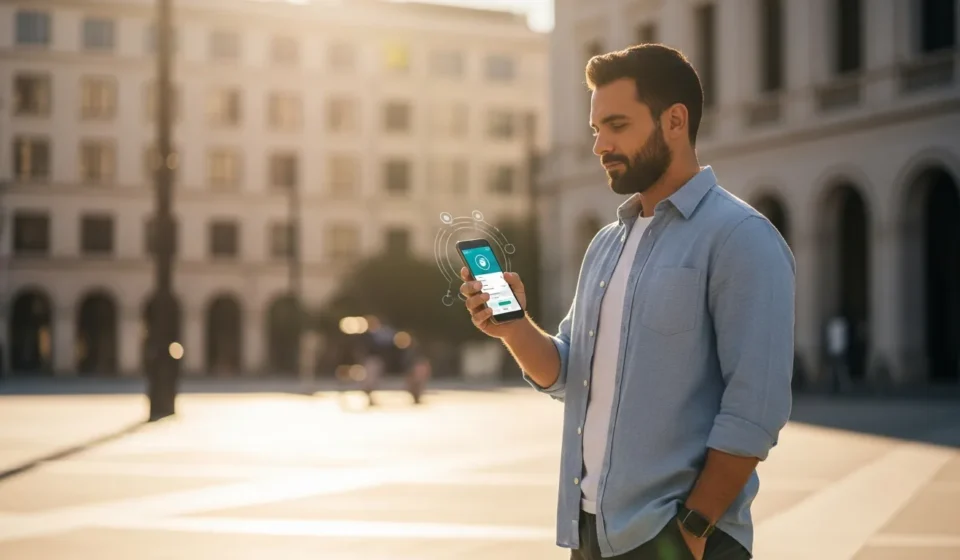
📸 Image generated using AI
How Can Digital Currency Programmable Government Subsidy Disbursement Transform Public Welfare?

The Shift Toward Programmable Public Funds
The days of waiting for a paper check to arrive in the mail or dealing with the lag of traditional bank transfers are rapidly coming to an end. As we move through 2026, the integration of digital currency programmable government subsidy disbursement is no longer a theoretical concept; it is a functional reality. By utilizing smart contracts, a government can now ensure that financial aid is not just sent, but used exactly as intended.
Traditional welfare systems often suffer from high administrative costs and significant time delays. When a citizen needs immediate relief, he cannot afford to wait weeks for processing. Programmable money solves this by embedding logic directly into the currency itself. This means the funds can be programmed to expire if not used, or restricted to specific categories like healthcare or education, ensuring the taxpayer’s money serves its primary purpose.
How Smart Contracts Automate Welfare
At the heart of this revolution is the smart contract. This is a self-executing piece of code that triggers a payment once specific conditions are met. For instance, if a citizen qualifies for a housing subsidy, the digital currency can be sent to his wallet with a restriction: it can only be transferred to a verified landlord. This eliminates the risk of the funds being diverted toward non-essential expenses.
While many associate these protocols with blockchain-based cross-border payment settlement, the same logic applies to domestic welfare. The efficiency gains are massive. Instead of a manual audit of thousands of receipts, the system provides a real-time, immutable ledger of how every cent was spent. This transparency builds trust between the state and the individual.
Eliminating Leakage and Fraud
One of the biggest hurdles in public finance is “leakage”—the loss of funds through corruption, middleman fees, or identity theft. Digital currency removes the need for multiple intermediary banks. When the government issues a subsidy, it goes directly from the central treasury to the citizen’s digital wallet. There is no opportunity for a third party to take a cut or for the funds to be lost in a complex web of legacy banking systems.
- Instant Verification: Biometric integration ensures the recipient is exactly who he claims to be.
- Geofencing: Funds can be programmed to work only within specific regions or at authorized merchants.
- Automatic Reconciliation: Government departments can see exactly how much of a budget has been utilized without waiting for end-of-month reports.
The Role of Infrastructure and Regulation
For this system to work, a robust legal and technical framework is required. Governments are currently refining their digital asset regulation and crypto licensing frameworks to ensure these disbursements remain secure and compliant with anti-money laundering standards. Without these guardrails, the system would be vulnerable to cyberattacks that could jeopardize a nation’s social safety net.
The technical infrastructure usually relies on a Central Bank Digital Currency (CBDC). Unlike volatile cryptocurrencies, a CBDC is a digital form of a nation’s sovereign currency. It provides the stability of the dollar or euro with the flexibility of a digital token. This allows the government to maintain monetary policy while gaining the surgical precision of programmable code.
Challenges for the Modern Citizen
Despite the benefits, the transition to programmable subsidies is not without friction. Privacy is a major concern for the average man. He may worry that the government is monitoring his every purchase. To address this, developers are implementing zero-knowledge proofs—a cryptographic method that proves a transaction is valid without revealing the specific details of what was bought.
Furthermore, the “digital divide” remains a hurdle. If a citizen does not have a smartphone or reliable internet access, he risks being excluded from the system. Governments are addressing this by issuing physical smart cards that hold digital currency offline, ensuring that even the most vulnerable members of society can access their benefits without technical barriers.
Frequently Asked Questions
What is a programmable government subsidy?
It is a form of financial aid delivered via digital currency that contains built-in rules. These rules dictate when, where, and how the money can be spent, ensuring it is used for its intended purpose, such as food or rent.
Does the recipient need a traditional bank account?
No. One of the primary advantages is financial inclusion. A citizen can receive his subsidy directly into a digital wallet on his phone or a government-issued smart card, bypassing the need for a commercial bank account.
Can the government take the money back?
Programmable money can include expiration dates. If a subsidy is intended for emergency monthly relief and the recipient does not use it within a set timeframe, the funds can automatically return to the treasury to be redistributed to others in need.