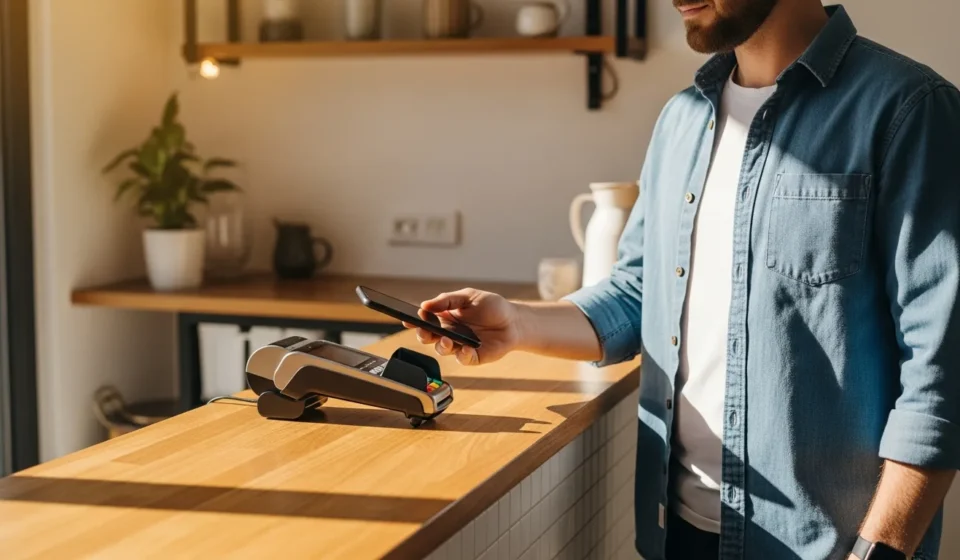
📸 Image generated using AI
How Will Central Bank Digital Currency Retail Use Cases Change Your Daily Life?

The Shift Toward Sovereign Digital Cash
Physical wallets are rapidly becoming relics of a bygone era. While credit cards and mobile apps have dominated the last decade, the next evolution lies in Central Bank Digital Currencies (CBDCs). Unlike the private digital money held in a commercial bank account, a retail CBDC is a direct liability of the central bank, offering the same safety as a physical banknote but in a digital format. For the average man, this means his money is no longer subject to the solvency risks of a private institution.
As we move through 2026, the focus has shifted from theoretical whitepapers to practical, everyday applications. These central bank digital currency retail use cases are designed to make transactions faster, cheaper, and more resilient than ever before.
Programmable Payments and Smart Contracts
One of the most transformative aspects of retail CBDCs is programmability. By embedding logic directly into the currency, a man can automate complex transactions without needing a third-party intermediary to hold funds in escrow. For example, when purchasing a high-value item like a vehicle from a private seller, the payment can be programmed to release only when the digital title is transferred to his name.
This level of automation bridges the gap between traditional finance and decentralized systems. Understanding the distinctions between fintech and decentralized finance is essential here, as CBDCs bring the efficiency of blockchain technology into a regulated, sovereign framework. This ensures that a user enjoys the benefits of automation while maintaining the legal protections offered by his national government.
Offline Transactions and Financial Resilience
A major hurdle for existing digital payment systems is their total dependence on internet connectivity. If the network goes down, commerce grinds to a halt. Retail CBDCs are being engineered to solve this through hardware-based offline capabilities. Using secure elements in smartphones or specialized smart cards, a man can tap his device against another to transfer value even in a remote area with zero signal.
- Emergency Preparedness: During natural disasters or power outages, CBDCs allow for continued local trade.
- Remote Accessibility: Men living in rural regions can participate in the digital economy without consistent 5G or Wi-Fi access.
- Privacy: Many offline models mimic the anonymity of physical cash for small-value peer-to-peer transfers.
Instant Cross-Border Remittances
Sending money across borders has historically been a slow and expensive ordeal, plagued by correspondent banking fees and predatory exchange rates. Retail CBDCs streamline this by allowing for direct, peer-to-peer transfers between individuals in different jurisdictions. If a man wants to send funds to his brother living halfway across the world, the transaction can settle in seconds rather than days.
This efficiency rivals existing frameworks like SEPA instant payment integrations, but on a global scale. By removing the layers of intermediary banks, the cost of remittances drops significantly, ensuring that more of a man’s hard-earned money actually reaches his family.
Targeted Government Disbursements (G2P)
Government-to-person (G2P) payments, such as stimulus checks, tax refunds, or social subsidies, often suffer from administrative delays and high distribution costs. With a retail CBDC, the government can deposit funds directly into a man’s digital wallet. These funds can even be “purpose-bound.” For instance, a fuel subsidy could be programmed so it can only be spent at authorized gas stations, preventing fraud and ensuring the aid is used as intended.
Enhancing Financial Inclusion for the Unbanked
Millions of men worldwide remain outside the traditional banking system because they lack the documentation or minimum balance required to open an account. A retail CBDC provides a low-barrier entry point. Since the wallet is provided or sanctioned by the central bank, it can serve as a basic financial tool for anyone with a simple mobile phone. This allows a man to build a digital transaction history, which he can eventually use to prove his creditworthiness and access more advanced financial services.
Micro-Payments and the Creator Economy
The current payment infrastructure is poorly suited for tiny transactions because the processing fees often exceed the value of the payment itself. Retail CBDCs enable frictionless micro-payments. A man could pay a few cents to read a single news article or tip a content creator a fraction of a dollar for a helpful video. This opens up new monetization models for independent creators, allowing them to bypass the high commission rates of traditional platforms.
Frequently Asked Questions
Are retail CBDCs the same as Bitcoin?
No. While both are digital, a CBDC is centralized and issued by a government, making it legal tender with a stable value. Bitcoin is a decentralized private asset with high volatility.
Can the government track every purchase I make?
Privacy is a major design consideration. Most central banks are exploring tiered models where small, everyday retail transactions offer cash-like anonymity, while larger transfers are subject to standard anti-money laundering checks.
Do I need a bank account to use a retail CBDC?
Not necessarily. One of the primary goals of a retail CBDC is to provide a digital payment tool for those who do not have, or do not want, a traditional commercial bank account.