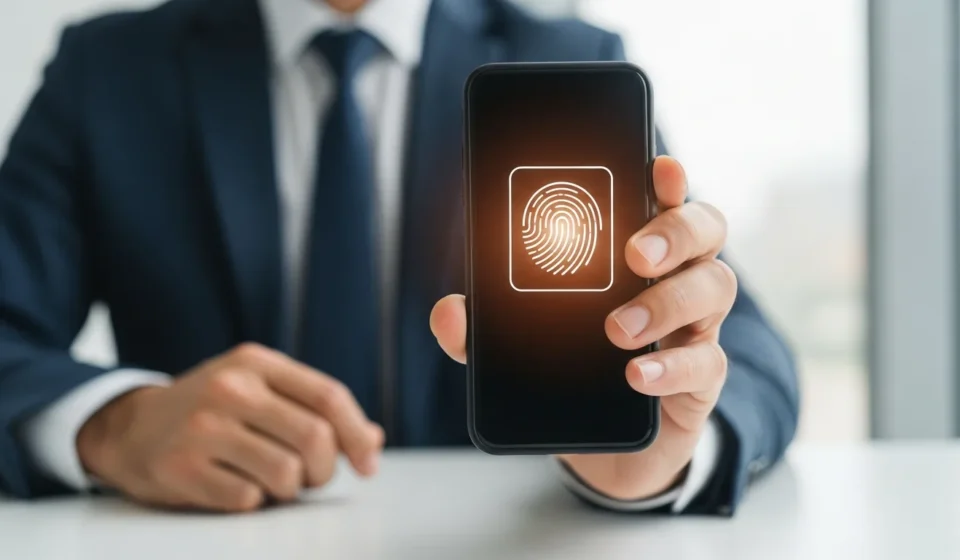
📸 Image generated using AI

The Death of the Password and the Rise of the Biometric Vault
The era of the 16-character password—cluttered with arbitrary symbols and numbers he can never remember—is officially over. In 2026, security has shifted from what a user knows to who he is. Digital identity biometric wallet authentication has emerged as the definitive solution to the friction and vulnerability of traditional logins. By anchoring a person’s legal identity to his unique biological markers within a secure mobile environment, fintech firms have finally closed the gap between convenience and ironclad security.
This transition isn’t just about unlocking a phone. It is about a comprehensive ecosystem where a man’s face, iris, or fingerprint serves as the master key to his entire financial life. Whether he is authorizing a high-value wire transfer or verifying his age at a terminal, the biometric wallet ensures that his sensitive data never leaves his possession.
The Architecture of a Modern Biometric Wallet
A biometric wallet functions as a decentralized repository for a user’s credentials. Unlike centralized databases that are prime targets for hackers, these wallets utilize Self-Sovereign Identity (SSI) principles. When he sets up his wallet, his biometric data is encrypted and stored in a “Secure Enclave” on his device hardware. This means the service provider never actually sees his fingerprint; they only receive a cryptographic proof that the authentication was successful.
Key components of this architecture include:
- On-Device Processing: All biometric matching happens locally, ensuring that even if a server is breached, his biological data remains safe.
- Zero-Knowledge Proofs (ZKP): He can prove he is over 21 or has a specific credit score without revealing his actual birthdate or bank balance.
- Multi-Modal Verification: Combining facial recognition with voice patterns or gait analysis to prevent sophisticated spoofing attempts.
As he navigates an increasingly complex web of services, staying ahead of fintech cybersecurity modern threats requires this level of hardware-level integration. A software-only approach is no longer sufficient to stop modern adversaries.
Defeating Deepfakes with Liveness Detection
The biggest threat to biometric security in 2026 is the proliferation of AI-generated deepfakes. A hacker might attempt to use a high-resolution video or a 3D mask to impersonate a user. To counter this, advanced biometric wallets employ active and passive liveness detection.
When he looks into his camera, the system analyzes micro-expressions, blood flow patterns in the skin, and the reflection of light off his pupils. If the system detects a static image or a synthetic overlay, it immediately kills the session. This level of ai fraud prevention and synthetic identity detection is what allows financial institutions to trust remote onboarding as much as an in-person meeting.
The Business Case for Biometric Authentication
For the fintech executive, the shift to biometric wallets isn’t just a security upgrade; it is a massive conversion play. Friction is the enemy of profit. When a user has to reset a forgotten password, the drop-off rate skyrockets. By implementing a one-touch biometric flow, the developer ensures that the user stays within the app’s ecosystem.
Furthermore, it reduces the cost of Know Your Customer (KYC) compliance. Instead of manually reviewing scanned utility bills and passports, the wallet provides a pre-verified, government-backed digital ID. He can open a new brokerage account in seconds because his identity has already been cryptographically signed by a trusted issuer.
Future-Proofing Identity in a Decentralized World
Looking forward, the integration of biometric wallets with decentralized finance (DeFi) is inevitable. He will use his biometric signature to interact with smart contracts, ensuring that his private keys are never exposed to the browser. This creates a “human-centric” security model where his physical presence is the only way to move assets. As he moves between different platforms, his digital identity remains portable, secure, and entirely under his control.
Frequently Asked Questions
What happens if I lose my phone with a biometric wallet?
Most biometric wallets use a decentralized recovery system. He can use a set of “social recovery” contacts or a backup phrase stored in a separate secure location to restore his identity on a new device. Since the data is tied to his biological traits, a thief cannot access the wallet contents without his physical presence.
Is biometric data stored on a company’s server?
No. Modern standards like FIDO2 ensure that biometric templates stay on the user’s device. The server only receives a digital signature confirming that the user successfully authenticated himself locally.
Can high-quality photos trick facial recognition in 2026?
No. 2026-era liveness detection uses infrared sensors and depth mapping to distinguish between a flat image and a living, breathing human face. It looks for involuntary movements and thermal signatures that a photo cannot replicate.