📸 Image generated using AI

The Death of the Manual Onboarding Queue
Waiting three business days for a bank account to open is a relic of the past. In 2026, a neobank user expects his account to be active before he finishes his coffee. This shift isn’t just about speed; it is about the sophisticated marriage of AI customer onboarding and KYC automation. For the modern neobank, the onboarding process is the first and most vital battleground for customer retention.
How AI-Powered KYC Automation Works in 2026
The traditional “know your customer” process involved a human clerk squinting at a scanned passport. Today, AI handles the heavy lifting. When a user submits his ID, machine learning models instantly analyze the document for micro-inconsistencies that the human eye would miss. These systems check for font irregularities, holographic shifts, and even the chemical signature of the paper in high-resolution captures.
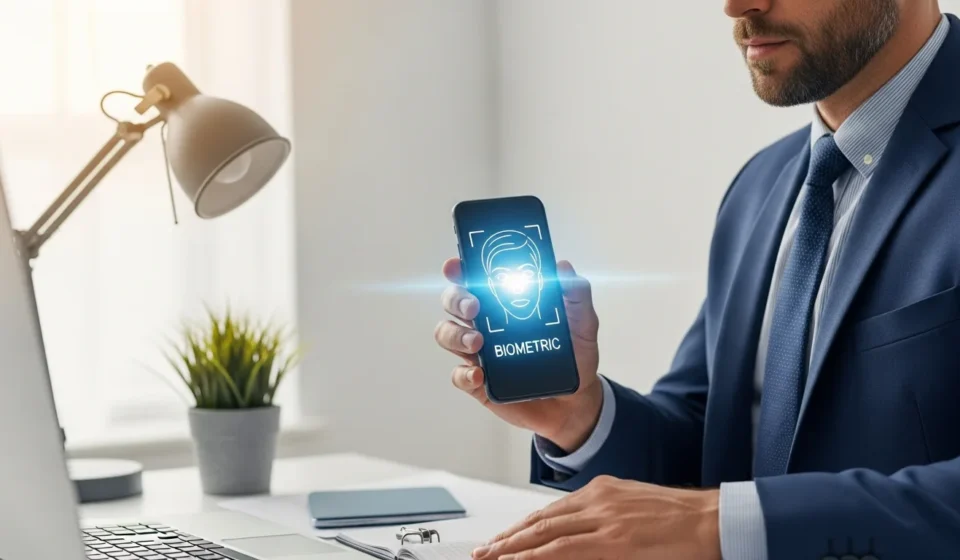
Modern neobanks are now integrating sophisticated fraud detection and deepfake prevention biometrics to verify identities in milliseconds. This ensures that the person behind the screen is a living, breathing human and not a synthetic generation or a static photo.
The Role of Liveness Detection and Computer Vision
Liveness detection has evolved. It no longer requires a user to perform awkward head tilts or blink repeatedly. Passive liveness technology analyzes skin texture, light reflection, and depth perception using the smartphone’s camera. If a fraudster attempts to use a high-definition mask or a video injection attack, the AI flags it instantly.
- Sub-second Verification: AI processes biometric data in under 500 milliseconds.
- Global Database Sync: Systems cross-reference IDs with international watchlists and government databases in real-time.
- OCR Precision: Optical Character Recognition (OCR) has reached 99.9% accuracy, even with damaged or poorly lit documents.
Solving the False Positive Nightmare
One of the biggest hurdles for neobanks has always been the “false positive”—flagging a legitimate customer as a risk. This friction often leads to high drop-off rates. By leveraging regtech AML false positive reduction via AI, these institutions can focus their human resources on genuine threats while letting honest users pass through the digital gates without delay.
The AI looks at the “digital footprint” of the user. It analyzes his device metadata, IP reputation, and even his typing cadence. If these behavioral markers align with a legitimate profile, the system lowers the risk score, allowing for a frictionless “green lane” onboarding experience.
Regulatory Compliance and the Future of Neobanking
Regulators in 2026 have moved from skepticism to endorsement of AI-driven KYC. The audit trails provided by automated systems are far more detailed than manual logs. Every decision made by the AI is recorded, providing a transparent “why” for every approved or rejected application. This level of accountability is exactly what he needs to ensure his neobank stays on the right side of global financial laws.
Frequently Asked Questions
How long does AI-powered KYC take?
In most cases, the entire process from document upload to account activation takes less than two minutes. The AI verification itself happens in real-time.
Can AI detect sophisticated deepfakes during onboarding?
Yes, modern AI uses 3D depth analysis and texture mapping to distinguish between a real human face and a digitally rendered deepfake or a high-resolution screen playback.
Does AI KYC automation replace human compliance officers?
No, it empowers them. AI handles 95% of standard applications, allowing human officers to dedicate their expertise to complex edge cases and high-risk investigations.